A dining table is one of the most functional pieces of furniture in any home. In Sydney, where homes range from compact apartments to large family houses, choosing the right table is about size, durability, and everyday use. Dining tables support far more than meals—they’re used for working from home, hosting guests, and daily family routines. Because layouts and lifestyle needs vary, many homeowners prefer Custom Dining Tables in Sydney that are designed to suit their space rather than adapting to mass-produced options.
Unlike off-the-shelf furniture, Custom Dining Tables in Sydney are crafted through a structured process that involves design planning, material selection, skilled craftsmanship, and professional finishing. Each stage plays a role in how the table performs, looks, and lasts over time. This guide breaks down that process step by step, explaining how a custom dining table is created from the initial concept through to the finished piece, with practical insights into materials, timelines, costs, and current Sydney furniture trends.
Designing Custom Dining Tables in Sydney
Every custom build starts with a conversation. It might feel like brainstorming over coffee with a friend: “What do you want it to be like?” The craftsman will ask about how you’ll use the table, what room it will live in, and who uses it most. Will it be a central feature or a quiet corner desk at times? Might it need extension leaves for the rare big family dinner? Sydney workshops often hear clients say things like, “I like the look of that, but can it be bigger?” or “I was thinking, maybe we could…”. From these ideas, designers sketch out possibilities. They consider shape (rectangular, round, oval), size (how many seats?), and practical features (drawers? cable holes? a pop-up section?).
Each measure and line is deliberate. For example, you’ll discuss dimensions: how tall should the table be? What width fits around your chairs? Will the legs be skinny or chunky? These sketches are revised until both you and the maker are happy. Wood selection and finish are decided later, but in this stage, you’re laying down the blueprint.
In a way, it’s like custom-tailoring a suit to your measurements: the table will be “sized exactly for your dinner parties”. Once the design is approved, detailed drawings are created. This might involve 3D renderings so you can visualise the finished piece from every angle. Only then does the creation phase begin in earnest.
Choosing Materials: Timber, Metal, and More
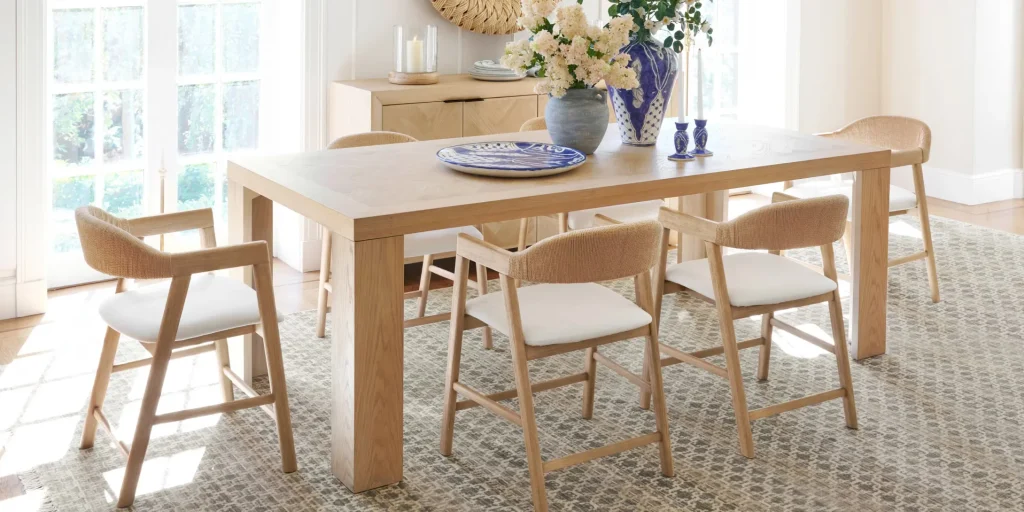
Once the design is confirmed, material selection becomes the most important decision. Materials influence how the table looks, how long it lasts, and how much it costs. For Custom Dining Tables in Sydney, solid timber remains the most popular option—especially Australian hardwoods known for strength and visual character.
Local furniture makers commonly work with Spotted Gum, Tasmanian Oak, and Blackbutt, all valued for durability and natural grain patterns. Spotted Gum, native to New South Wales, is especially prized for its strength and distinctive silvery-grey tones, making it ideal for long-lasting dining tables.
Tasmanian Oak (a grouping of eucalyptus species) offers a lighter, warm golden colour with a straight grain, while Blackbutt is harder and deeper in tone, suited to homes needing extra durability. Many workshops also use reclaimed or salvaged timber, which aligns with sustainability goals supported by the Australian Government’s guidelines for responsibly sourced Australian timber. Reclaimed slabs often feature knots, saw marks, and colour variation that add character rather than imperfections.
While timber dominates, other materials are sometimes introduced for contrast or structure. Metal legs, powder-coated steel frames, or brass accents can add a modern or industrial edge. Some designs also incorporate glass or ceramic inserts, although timber remains the primary surface due to its warmth and versatility. Whatever combination you choose, materials should suit both the Australian climate and your interior style.
Common Timber Choices for Custom Dining Tables
| Timber Type | Origin/Category | Qualities/Uses |
|---|---|---|
| Spotted Gum | Native Australian hardwood | Very strong and durable; dramatic grain (grey/beige) ideal for a statement table. |
| Tasmanian Oak | Native Australian hardwood | Light golden colour; straight, even grain; versatile and classic. |
| Blackbutt | Native Australian hardwood | Hard, golden-brown; excellent for stability and outdoor use. |
| Recycled Hardwood | Reclaimed Australian timber | Uniquely aged patina; eco-friendly choice; each table is one-of-a-kind. |
| American Oak | Imported hardwood (US/Europe) | Creamy tan hue; prominent grain; very durable, great for detailed finishes. |
| Walnut (American) | Imported hardwood | Deep rich brown colour; smooth grain; often used for luxury modern tables. |
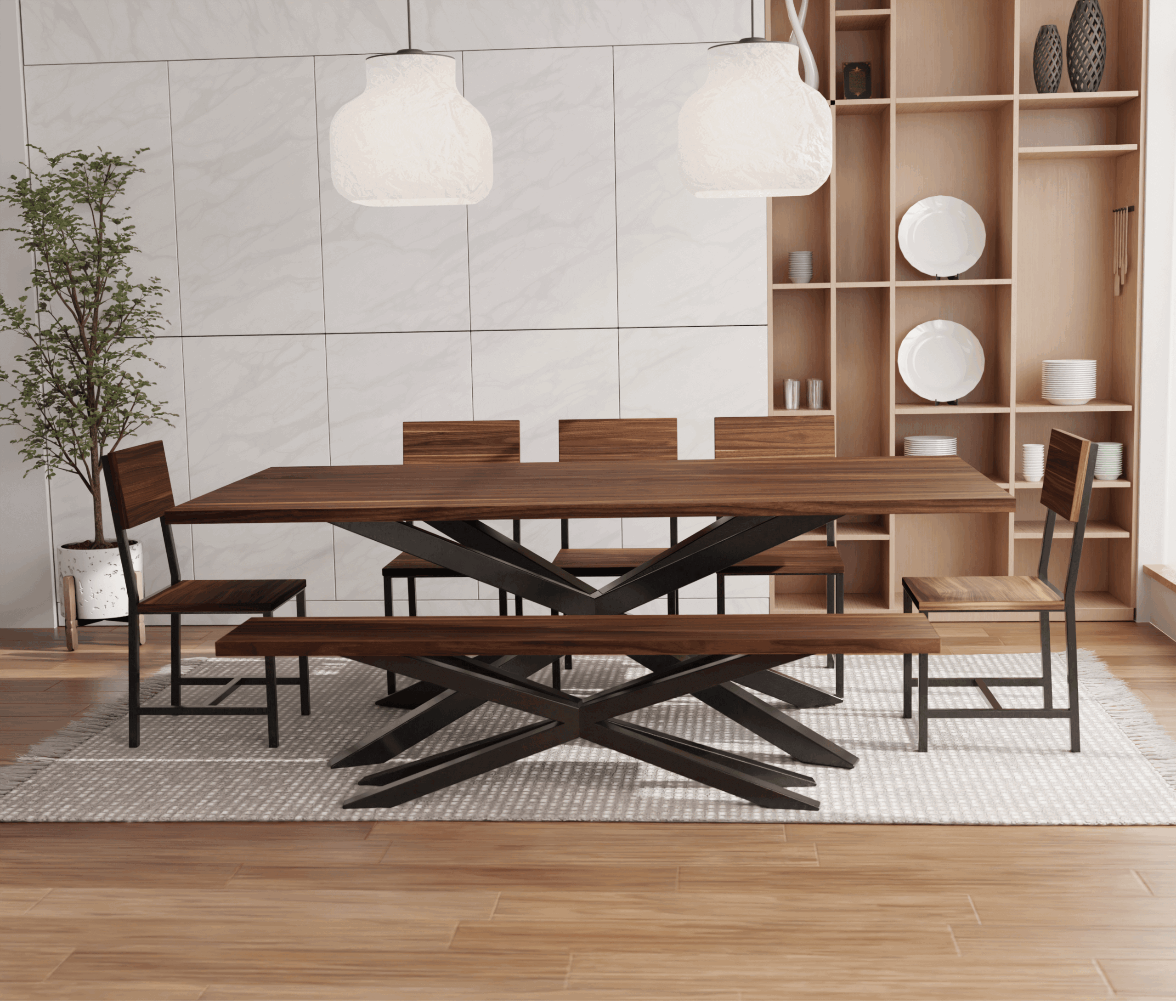
Solid timber dining tables naturally stand out. Reclaimed slabs paired with clean-lined metal legs highlight natural grain, knots, and subtle imperfections that mass-produced furniture often hides. Most makers prefer clear or natural finishes to showcase these details rather than masking them with paint.
When choosing materials, it’s also important to think ahead to the finish. A live-edge slab suits a relaxed, organic interior, while a finely sanded tabletop works better in contemporary homes. Matching dining chairs, flooring, or nearby cabinetry will also help guide your choice. Timber may be just one element of the table, but it’s the surface you’ll see and touch every day—so it’s worth choosing carefully.
Craftsmanship in Action: Building Your Table
Once the design and materials are finalised, the hands-on build begins. This stage follows a clear, methodical process to ensure strength, accuracy, and longevity.
Here’s how custom dining tables in Sydney are typically built:
- Timber Preparation
Timber boards are cut to size and allowed to acclimatise. Wider tabletops are created by joining multiple boards into a single solid panel. - Shaping and Profiling
Edges are shaped based on the design—straight, chamfered, rounded, or live-edge. Legs and support frames are cut and prepared at this stage. - Traditional Joinery
Strong joints such as mortise-and-tenon or dovetails are used instead of visible screws. This improves durability and keeps the structure clean. - Dry Fitting and Assembly
All parts are assembled without glue first to check alignment. Once confirmed, components are glued and clamped for 24–48 hours. - Extension Mechanisms (If Required)
For extendable tables, sliding rails or butterfly leaves are installed with precision to ensure smooth movement. - Sanding and Surface Refinement
The table is sanded through multiple grit levels, finishing with fine sanding to create a smooth, even surface. - Final Quality Checks
Builders inspect the table for balance, surface consistency, and structural integrity before moving to finishing.
This process alone can take several weeks, which is why custom dining tables in Sydney often require 10–14 weeks—or longer for complex designs.
Finishing Touches: Stains, Oils, and Polishes
The last step is making the table shine (or sitting matte!). This is where finishing truly brings out the wood’s character. First the table is inspected and given final fine sanding (sometimes by hand) to knock down any tiny raised grain. Then a finish is applied.
Many Sydney craftsmen love natural oils (like tung or Danish oil) or clear lacquers; these protect the wood while highlighting its grain. As one Australian furniture maker explains, the goal of finishing solid oak is to “preserve and enhance” the wood’s natural beauty. So you’ll often see finishes that warm the tone just slightly and make the grain pop, rather than hiding it under opaque paint. Wax finishes are also used, giving a subtle sheen and a tactile warmth to touch.
In recent years, eco-friendly finishes have trended up. Look for low-VOC oils and water-based lacquers made from sustainable formulas. Sometimes a table will get a two-tone effect – for example, a deep walnut stain on the frame and a lighter oil on the top – but most dining tables in Sydney keep a single natural stain. trendy details like an epoxy resin river or inset can also be added at this stage if your design called for them. But mostly, it’s about sanding, staining or oiling, then a final polish. A high-quality finish might involve multiple coats (say, 3–5 layers) of oil or lacquer, each sanded lightly before the next. The result is a durable surface that can resist spills and scratches.
Modern trends favor finishes that let the wood shine through: raw or matte looks are big in 2025. Natural imperfections like small knots or grain patterns are left visible. For example, live-edge tables (edges of wood with the bark still on) are sealed to feel smooth but still show their wavy profile. Some tables even combine materials here (a thin concrete or ceramic top inset, etc.), but wood-on-wood with a clear finish remains a timeless choice.
Delivering the Dream: Installation and Care
With finish done, your custom dining table is ready for its home. Craftsmen will usually arrange delivery – some will help carry it into place and even assemble parts (screwing on legs or inserting the leaf) in your room. You’ll inspect for any scratches or dust, and often you’ll be introduced to the people who built it.
Many owners love shaking hands with the artisans at this reveal. (One happy customer even praised meeting the craftsmen who installed her custom Fijian Mahogany furniture – it felt like thanking the artists after a concert.)
Once it’s in place, give your table a little time to settle. Solid wood can expand or contract slightly with humidity. Avoid setting hot pots or wet glasses directly on the surface. (A coaster or trivet will extend the finish’s life.) Periodically, you may rub on a fresh layer of furniture oil or wax (especially if it’s an oil finish) to keep it nourished.
Dust regularly with a soft cloth. With proper care, a well-made dining table becomes heirloom quality – the kind of piece you expect to use for decades. Indeed, some makers tout that their 100% solid hardwood tables are built to outlast trends, meaning your investment pays off in longevity.
Trends in Sydney’s Dining Furniture
In recent years Sydney’s style trends have shaped what custom tables look like. Sustainability is huge. More buyers insist on reclaimed or FSC-certified timber to minimize environmental impact. You might even see bamboo or plantation-grown wood options. These eco-friendly materials are not only green but also often tell a story in their grain.
Design-wise, curves and flexibility are in vogue. Straight rectangular tops are giving way to round, oval, or even kidney-shaped tables. Round tables fit snugly in small urban apartments and encourage a cosy round-table chat. Expandable tables are popular too. A design with hidden leaves or butterfly panels can be compact on normal days and then stretch out for a barbecue or holiday dinner. Sydney families with busy lifestyles love this versatility – one table for four on weeknights, and stretching out to ten for a Sunday family brunch.
Curved shapes are trending. Sydney designers now often recommend round or oval tables, especially for smaller spaces. These gentle curves add flow and soften a room. No sharp corners means easier conversation (and safer toddlers). Many studios now highlight such organic forms as both functional and stylish.
Natural finishes are also a big theme. Raw, textured looks – like a live-edge slab with all its knots – “feel handcrafted”. Warm, earthy stains that highlight the wood grain are preferred over stark paints. Spotted Gum or American Oak with visible grain feels contemporary yet timeless. In fact, oak and walnut are noted as hardy choices for Australia’s coastal humidity. As one trend report puts it: “Natural wood finishes add warmth” and are “never out of style”.
Finally, Sydney’s custom table scene values personalization. Unlike generic chain-store tables, a custom piece can include clever storage (drawers for cutlery or charging stations) or match other furniture in your home. The upshot? Your dining area feels unique. As one happy Sydney customer said of her Tasmanian Blackwood table: it “adds so much space and appeal to the room”.
These bespoke pieces, whether ultra-modern or rustic, are what make a home feel truly yours.
In short, today’s Sydney buyers want custom dining tables that are eco-friendly, functional, and beautiful. Local makers have adapted, offering quick turnarounds and responsibly sourced timbers. Whether it’s a chunky heirloom slab or a sleek minimalist top, the goal is the same: a durable table that suits your life and style. (If you’re curious about cost or timing: expect to invest more time and money than for a flat-pack, but also expect a piece that will last generations.)
Conclusion
Building a custom dining table in Sydney is a journey of creativity, craftsmanship and care. From that first spark of an idea to the moment you see the finished table in your home, every step is hands-on and tailored to you. It starts with a design chat and sketches, moves through carefully chosen hardwoods, meticulous joinery and a fine finish, and ends with your new family gathering spot.
Along the way, local experts bring decades of experience: some Sydney studios have been honing dining table craftsmanship for 20+ years. The result is a one-of-a-kind table that fits your space exactly, tells your story, and can become an heirloom.
Whether you dream of a rustic long table for weekend feasts or a compact round table for coastal dinners, a custom piece can make it real. It may cost a bit more (typically in the $4,000–$12,000 range in Australia) and take a few months to create, but the payoff is lasting quality and personalized style. In a way, commissioning a table is like planting a living tree in your home – it grows character over time. If you’re keen to explore this path, talk to a local furniture maker or designer. They’ll guide you through choices of wood, style and finish, ensuring your vision comes to life just as you imagined.
Ready to start? Think about the shape and wood you love, gather some inspiration images, and reach out to a Sydney craftsperson. Soon enough, that sketch on paper could be standing solidly in your dining room, waiting for its first dinner guests.
FAQs
How long does it take to make a custom dining table?
Most solid-timber custom tables are crafted in about 10–14 weeks once design is final. A simple table might be faster, but complex designs or live-edge slabs can stretch the timeline (often up to 4–5 months).
What factors affect the cost of a custom dining table?
Key factors are size (bigger = more wood), material (exotic or reclaimed timbers cost more), and design complexity. Intricate joinery or built-in features (drawers, extensions) add labour time. For reference, Australian-made custom dining tables often range from $4,000 to $12,000 depending on these factors.
Which timbers are popular for Sydney custom dining tables?
Locally, hardwoods like Spotted Gum, Tasmanian Oak, Blackbutt and reclaimed native timbers are very popular. They’re chosen for beauty and durability. Some clients also mix in imported woods like oak or walnut for contrast.
Why choose a custom dining table over a ready-made one?
A custom table fits your space and taste perfectly. It’s made with higher-grade materials and attention to detail, often sustainably sourced. Custom pieces can be durable “furniture for life”, while mass-produced ones may not last as long. You also get to collaborate on the design, making it truly yours.
Can reclaimed wood be used for a custom dining table?
Yes! Reclaimed hardwood is a hot trend. Many Sydney makers craft tables from salvaged timber, preserving each board’s unique marks. The result is eco-friendly and one-of-a-kind – no two reclaimed tables will look exactly alike.